

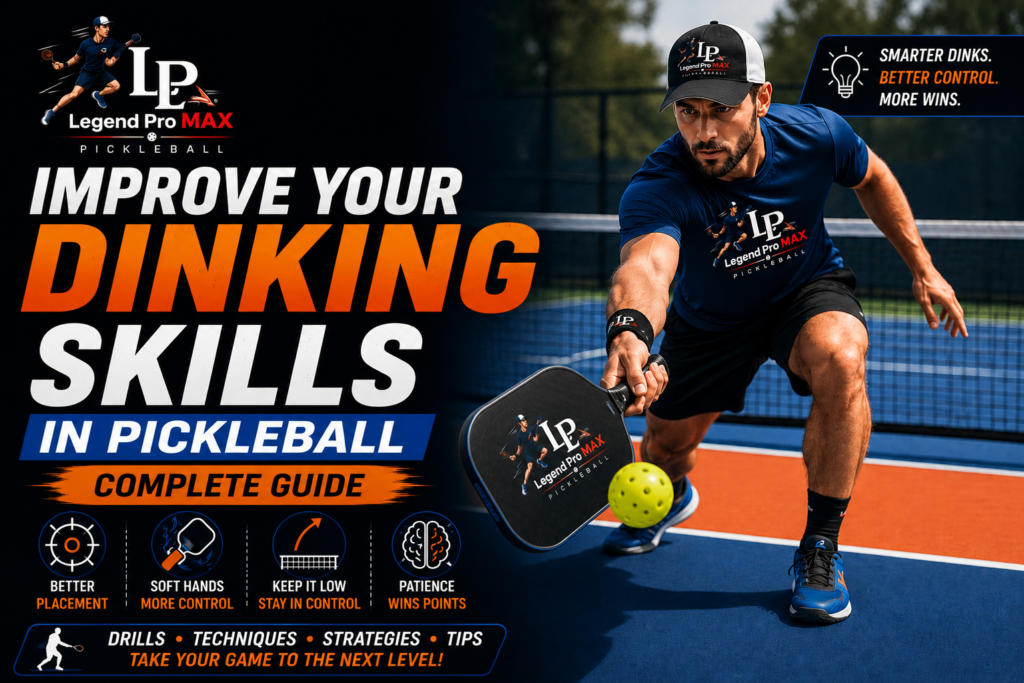
If you’ve ever watched experienced pickleball players compete, you’ve probably noticed how often they use dinks instead of powerful shots.
Dinking is one of the most important skills in pickleball because it helps players control rallies, force mistakes, and create scoring opportunities.
Many beginners focus only on power, but advanced players know that winning often comes down to patience, precision, and smart dinking strategies.
In this complete guide, you’ll learn the best pickleball dinking tips, common mistakes to avoid, and practice drills that can quickly improve your performance.
What Is Dinking in Pickleball?
A dink is a soft shot that lands inside your opponent’s kitchen (non-volley zone).
The goal is not power.
The goal is control.
A good dink forces your opponent to hit upward, making it harder for them to attack.
Characteristics of a Good Dink
- Soft contact
- Low trajectory
- Controlled placement
- Lands in the kitchen
- Difficult to attack
Dinking is often described as the chess game of pickleball because it requires patience and strategy.
Why Dinking Is So Important
Many players underestimate dinking when they first start playing.
However, dinking provides several important advantages.
Better Rally Control
Dinking slows down the pace of the game and allows you to dictate the rally.
Fewer Unforced Errors
Soft shots are often easier to control than aggressive drives.
Forces Opponent Mistakes
Well-placed dinks can create difficult situations for opponents.
Creates Attack Opportunities
A weak return from your opponent can set up an easy winner.
Understanding the Kitchen Zone
Before improving your dinking skills, you must understand the kitchen.
The kitchen, also called the non-volley zone, extends seven feet from the net on both sides.
Because players cannot volley inside this zone, dinking becomes a powerful tactical tool.
Most dinking exchanges happen around the kitchen line.
Learning to control this area is essential for long-term success.
7 Proven Pickleball Dinking Tips
1. Keep the Ball Low
One of the most important pickleball dinking tips is keeping the ball low over the net.
A high dink gives your opponent an opportunity to attack.
Goal
Make your opponent hit upward rather than downward.
The lower your dink travels, the more difficult it becomes to attack.
2. Use Soft Hands
Many beginners grip the paddle too tightly.
This often causes the ball to pop up.
Instead:
- Relax your grip
- Absorb ball impact
- Focus on touch rather than power
Soft hands create softer and more controlled dinks.
3. Aim for Your Opponent’s Feet
A dink directed at your opponent’s feet is much harder to return.
This strategy:
- Reduces attack options
- Creates awkward contact points
- Increases the chance of mistakes
Targeting feet is one of the most effective pickleball dinking tips used by advanced players.
4. Stay Balanced
Proper balance improves consistency.
Always:
- Bend your knees
- Stay on the balls of your feet
- Maintain an athletic stance
Balanced players react faster and execute better dinks.
5. Be Patient
One of the biggest mistakes players make is forcing attacks too early.
Dinking is often a battle of patience.
Wait for:
- A high return
- Poor positioning
- An obvious opportunity
Smart players win more points by waiting rather than rushing.
6. Use Different Placements
Predictable dinks become easy to defend.
Mix your shots:
Crosscourt Dinks
Provide greater margin for error.
Straight Dinks
Apply direct pressure.
Wide Dinks
Force movement and create openings.
Changing locations keeps opponents uncomfortable.
7. Practice Consistency Over Power
Power wins some points.
Consistency wins matches.
A player capable of landing 20 consecutive dinks will usually outperform a player who constantly attempts risky winners.
Focus on:
- Accuracy
- Placement
- Patience
These qualities separate advanced players from beginners.
Common Dinking Mistakes
Hitting Too Hard
The most common mistake.
Dinks should be soft and controlled.
Standing Too Upright
Good dinking requires a low athletic stance.
Bending your knees improves control significantly.
Looking for Winners Too Early
Many players attack before creating the right opportunity.
Patience is often the better strategy.
Poor Footwork
Bad positioning leads to rushed shots and inconsistent contact.
Always move your feet before hitting the ball.
Best Dinking Drills for Beginners
Drill 1: Continuous Dinking
Stand at the kitchen line.
Goal:
Maintain a dink rally for:
20 consecutive shotsThis improves consistency and touch.
Drill 2: Crosscourt Dinking
Practice crosscourt dinks with a partner.
Benefits:
- Better control
- Increased accuracy
- Improved placement
Drill 3: Target Dinking
Place cones inside the kitchen.
Try landing dinks near the targets.
This develops precision and shot control.
Drill 4: Forehand and Backhand Dinks
Alternate between:
- Forehand dinks
- Backhand dinks
This improves versatility during matches.
Advanced Dinking Strategies
Once you’ve mastered the basics, focus on advanced techniques.
Disguised Dinks
Make opponents unsure where the ball is going.
Speed Changes
Alternate between slower and slightly faster dinks.
Spin Dinks
Use topspin or slice to create difficult bounces.
Angle Creation
Force opponents off the court using wide dinks.
These strategies can significantly improve your competitive performance.
Equipment That Helps Improve Dinking
The right paddle can improve control and consistency.
Many players prefer:
Carbon Fiber Paddles
Benefits:
- Better touch
- Improved control
- Enhanced spin
Comfortable Grips
Reduce tension and improve feel.
Players focused on dinking often choose control-oriented paddles rather than power-focused models.
Frequently Asked Questions
What is dinking in pickleball?
Dinking is a soft shot that lands inside the opponent’s kitchen and is designed to create control rather than power.
Why is dinking important?
Dinking helps control rallies, reduce errors, and create scoring opportunities.
How do I improve my dinking?
Practice consistency, keep the ball low, use soft hands, and perform regular dinking drills.
What paddle is best for dinking?
Control-oriented carbon fiber paddles are often preferred for dinking because they provide better touch and precision.
Final Verdict
Mastering dinking is one of the fastest ways to improve your pickleball game.
The best pickleball dinking tips focus on:
- Keeping the ball low
- Using soft hands
- Staying patient
- Improving consistency
- Practicing regularly
Players who invest time in developing their dinking skills often gain a significant advantage over opponents who rely only on power.
Remember:
Control creates opportunities, and opportunities win matches.
Also, Check out these:
What Is Pickleball?
Best Pickleball Paddle for Beginners